Is Solitaire Good for Your Brain? The Real Benefits
Solitaire is good for your brain in a modest, specific way: it asks for sustained attention, working memory and planning, and asks calmly. Here is what that does for you, and what it does not.
Yes, in a modest way. Solitaire is a low-stress exercise in sustained attention and working memory: you hold card positions in your head, plan a few moves ahead and stay on one task for ten minutes, and most people find it a reliable way to unwind. It is not a proven way to prevent cognitive decline, raise your IQ or treat anything a doctor would treat, whatever the app stores imply.
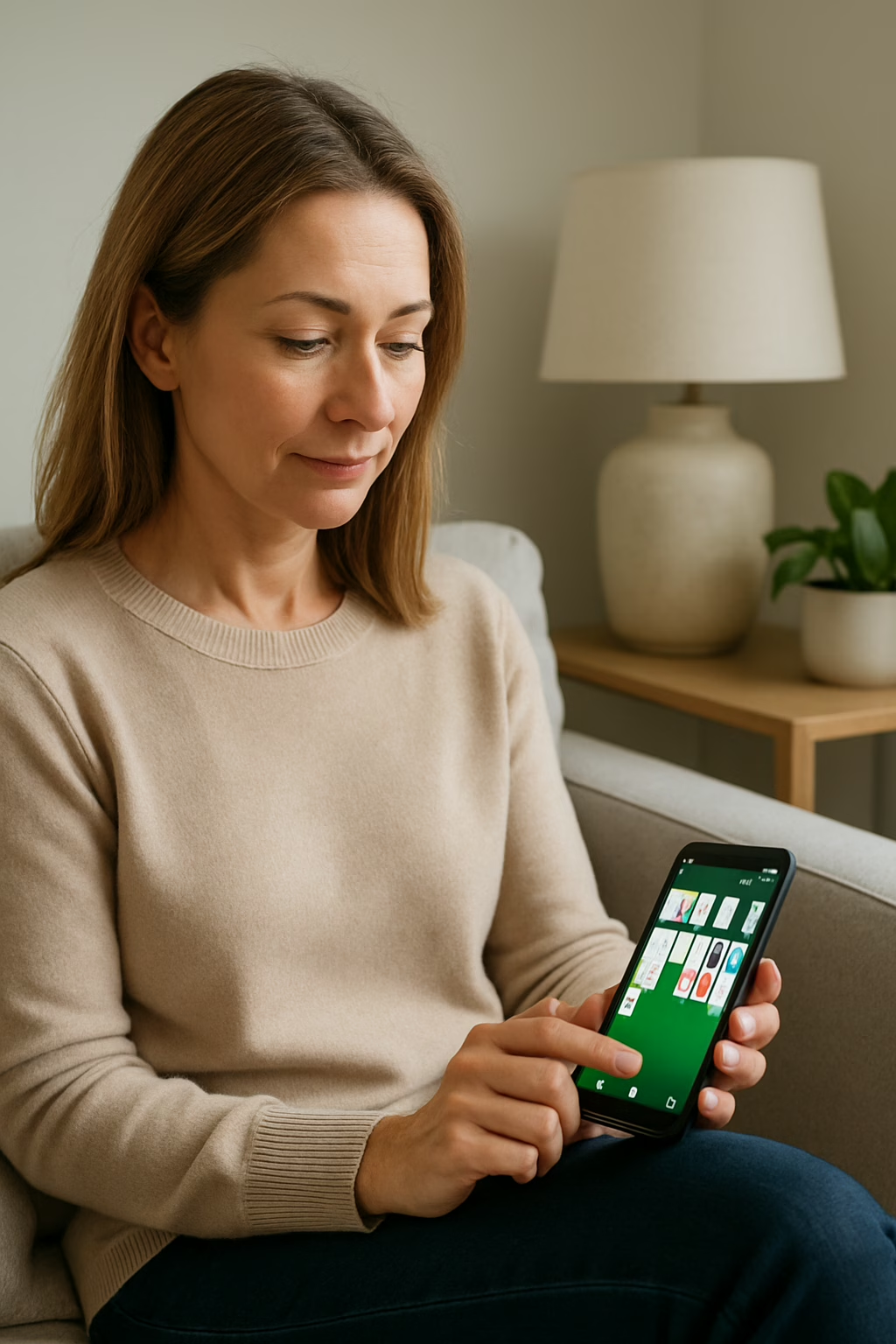
Those benefits come from how the game is built. Most phone games run on social pressure and escalating stimulus; Solitaire is a closed problem with no opponent and no audience. The ten sections below take the benefits one at a time, and say where each one stops.
1. Improves Concentration and Focused Attention
A game of Solitaire demands your full attention, even if it does not feel demanding. Tracking card positions, planning legal moves, and anticipating what the next flip from the stock might enable: all of this requires sustained focused attention. You cannot win at Solitaire while half-watching television and only glancing at the cards every few seconds.

That kind of single-task attention is hard to come by between notifications and tab-switching, and a game of Solitaire is ten minutes of practicing it. Whether the habit carries over to work or reading is not something a card game can promise. The ten minutes of focus are real either way.
2. Builds and Exercises Short-Term Memory
Effective Solitaire play involves remembering where specific cards are located: which face-down pile hides the card you need, which cards have already passed through the waste pile, and which suits are running ahead or behind on the foundations. This is active memory work, not passive consumption.

Working memory is the short-term scratchpad you use to hold a phone number or follow a recipe. Solitaire leans on it constantly, and every deal sets a fresh problem, so it never turns into rote repetition. That describes what the game asks of you. It is not evidence that your memory will measurably improve, and we would not claim it.
3. Develops Strategic Thinking and Planning
Every move in Solitaire is a decision, and many of those decisions have cascading consequences. Should you send that 4 of hearts to the foundation now, or keep it on the tableau where it is blocking a face-down card? Do you fill the empty column with a King immediately, or wait for a better sequence to emerge? These are real strategic planning questions, and the answers decide the deal.

This kind of consequential decision-making under uncertainty shows up anywhere an action has downstream effects, from planning a workweek to managing money. Solitaire is a low-stakes place to practice thinking ahead, weighing trade-offs and learning from outcomes. Our guide to winning Solitaire in fewer moves shows how much planning a single deal can hold.
4. Provides Genuine Stress Relief
Stress relief is the benefit most players notice first. Solitaire works as a structured distraction: absorbing enough to pull attention away from anxious thoughts, but not so demanding that it creates stress of its own.

The rhythm of card play, drawing and evaluating and moving, creates a loop that many players describe as meditative. Unlike high-adrenaline action games or competitive social games that trigger performance anxiety, Solitaire is a private, low-pressure experience. There is no one to judge your play, no real-time opponent to beat, and no consequence beyond the game itself. That calm does depend on which version you pick. A countdown clock or a move timer puts back exactly the pressure you were trying to escape, which is why we rounded up the relaxing solitaire games that have no timers.
That makes Solitaire useful in transitional moments: the few minutes between stressful meetings, the wind-down before sleep, or a commute that would otherwise go to scrolling. A short game can work as a mental reset that leaves you calmer than a social feed would.

5. Cultivates Patience and Emotional Resilience
The original English name for Solitaire, Patience, is not an accident. The game inherently rewards a patient, deliberate approach and penalizes impulsive play. A player who rushes through moves without thinking typically loses faster; a player who takes their time, evaluates options, and accepts that some deals will not work out builds real emotional tolerance for uncertainty and setback.
Sitting with a problem, trying approaches methodically and accepting an outcome without frustration are small parts of what people mean by resilience, and every deal asks for them. The game also gets you used to the idea that some problems cannot be solved however well you play. That is a useful thing to practice somewhere the stakes are a deck of cards.
6. Enhances Pattern Recognition
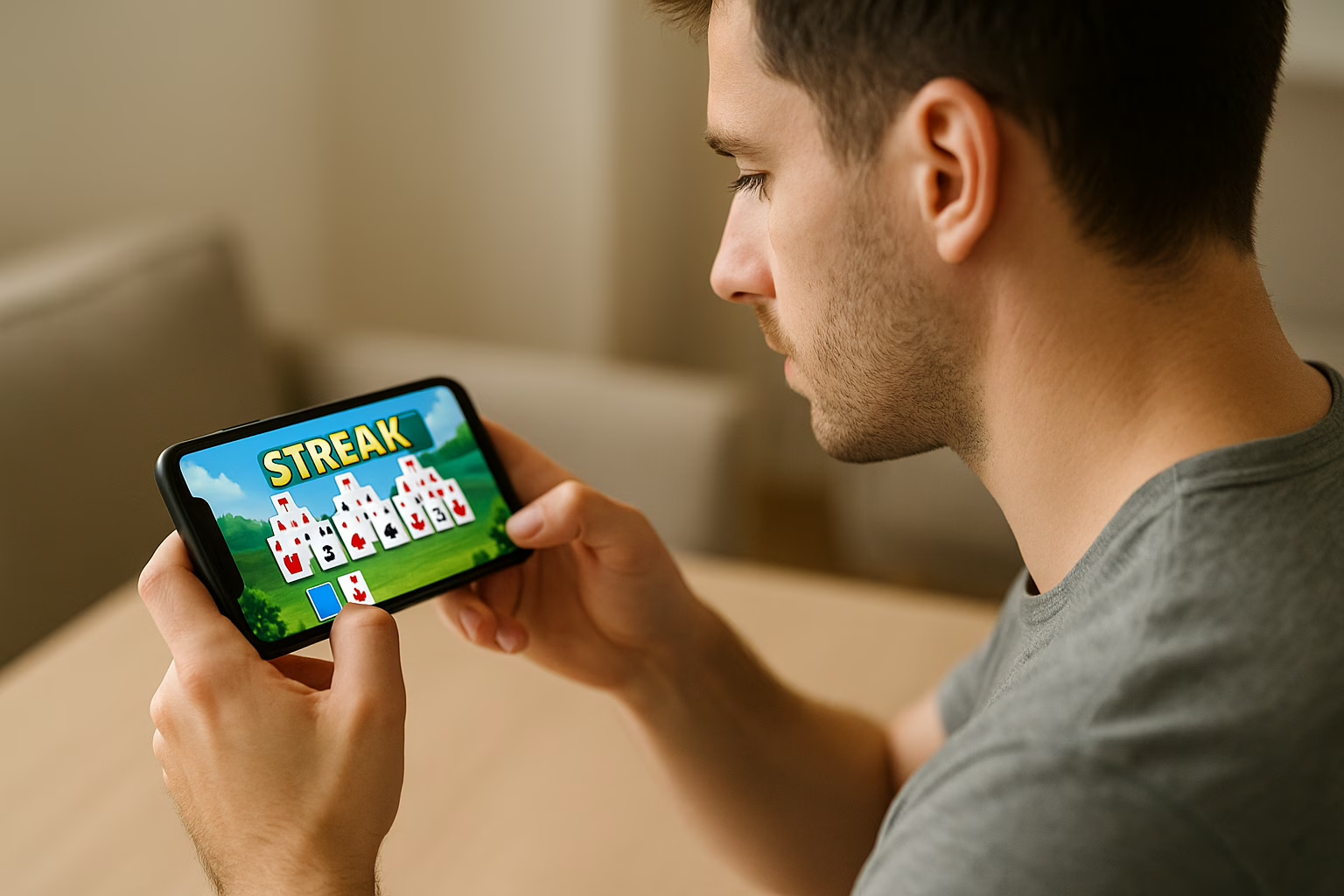
Experienced Solitaire players develop an eye for card patterns that beginners do not have. They spot dangerous board configurations, see multi-move sequences early and sense which moves will help or harm their position. This visual pattern recognition is the most obvious skill the game builds, and it improves quickly with practice.
How far that skill transfers outside the game is an open question, so we will not oversell it. What is clear is that building it feels like play rather than work. Different Solitaire variants train it differently, so our guide to 10 types of Solitaire is a reasonable place to find the one that challenges you most.

7. Supports a Calming Bedtime Routine
Screens before bed are not ideal, and a card game does not change that. But what you do on the screen matters too. News, social feeds and fast action games are built to keep you stimulated; Solitaire asks the problem-solving part of your mind for something calm and finite, closer to a crossword than to a feed.
Plenty of players use a short evening game to step out of work mode before sleep. The trick is to keep it calm rather than chase a win, which means stopping after a loss as readily as after a win. If you play on a phone at night, turn the brightness down and decide when you will stop before you start.

8. Accessible Cognitive Engagement at Every Age
Solitaire is easy to learn at any age. A child can pick up the basic rules of Klondike or TriPeaks in a few minutes, and the strategy holds up for adults and older players for decades. Few games ask for real thought across that wide an age range.
For older adults, it is one of the easiest ways to keep a daily habit that asks for planning and memory. Researchers have studied mentally active hobbies and healthy ageing, but we know of no study showing that Solitaire in particular protects against cognitive decline, so treat it as an enjoyable habit rather than a treatment. The same goes for the wider card-game family: plenty of the 20 fun 2-player card games we cover elsewhere are happily played by a grandparent and a grandchild with a single deck between them.

9. Encourages a Healthy Digital Activity
Not all phone time is the same. A useful line runs between passive consumption (scrolling feeds, watching videos) and active engagement (solving, creating, planning). Solitaire sits firmly on the active side: instead of absorbing a stream of content, you are making decisions, holding information in memory and planning ahead.
So if a screen is coming out in those short gaps anyway, Solitaire is a better use of them than a feed. You end the session having finished something, rather than having been fed something.

10. Delivers the Satisfaction of Completion
Winning a game of Solitaire, particularly a difficult one, delivers a real sense of accomplishment. This is not trivial. Completion satisfaction is the feeling that a problem was engaged with, worked through and resolved. When so many tasks feel endless or ambiguous, a card game with a clear win condition offers a clean arc.
Even losing deals offer a version of closure: the deal played out, you worked with what you had, and the outcome is clear. There is no unfinished business. A beginning, a middle and a definite end is part of what makes Solitaire satisfying in a way that open-ended feeds are not.

Playing Solitaire Mindfully
The benefits described above come from mindful, engaged play rather than from marathon sessions. Here are a few simple guidelines:
- Set a time limit before you start and stick to it. Five to fifteen minutes is often ideal.
- Play without multitasking. The cognitive benefits come from focused engagement.
- Accept difficult deals calmly. Some layouts are unsolvable, which is part of the game rather than a failure.
- Appreciate the process, not just the outcome. The strategic thinking during play is where most of the benefit lies.
- Use Solitaire as a deliberate break activity, not a default screen habit.
None of this is medical advice, and a card game is not a treatment. What it is, reliably, is fifteen calm minutes that ask something of you. If you want those minutes on a phone, Solitaire Castle Royal is our TriPeaks game: 14,000+ levels, standard levels untimed, and no coins needed to start one, though it is a progression game with events and rewards, so set your own stopping point. You can also read why TriPeaks is winning over Solitaire fans worldwide or the history behind the game.