The 20 Best Card Games for 2 Players (Easy to Advanced)
Twenty two-player card games you can play tonight with one deck — each with the deal, the goal, and the real rules of play, plus a comparison chart and picks by skill level.
The best card games for 2 players are Cribbage if you want depth, Gin Rummy if you want a game you can play every evening for years, Speed if you have two minutes, Go Fish or War if you are teaching a child, and Double Solitaire if you both already play Solitaire. All twenty games below are laid out the same way — the deal, the goal, and the rules of play in enough detail to start a game without looking anything else up.

Almost everything here needs one standard 52-card deck and nothing else. Only three games are exceptions: Cribbage wants a board (a pen and paper does the job), Double Solitaire needs a second deck with a different back, and Old Maid is played with one Queen removed. Piquet uses the same deck with the low cards stripped out.
Quick picks — if you want one recommendation rather than twenty:
- Best overall: Cribbage — the richest scoring system in any two-handed card game, and still interesting after a hundred hands.
- Easiest to learn: War — there is nothing to explain. Flip a card, higher card wins.
- Fastest: Speed — a round is over in one to two minutes, and nobody waits for a turn.
- Most strategic: Piquet — three centuries old, genuinely deep, and the hardest game on this list to learn.
- Best for couples and date night: Gin Rummy — short hands, a running score, and enough space between decisions to actually talk.
All 20 Card Games for 2 Players Compared
Difficulty below is about how hard the game is to learn and play well — not how likely you are to win. Round times assume two players who already know the rules; matches played to a target score take considerably longer.

| Game | Difficulty | Time per round | What you need | Best for |
|---|---|---|---|---|
| War | Very easy | 15–30 min | Standard 52-card deck | Young children; zero-effort play |
| Speed | Easy | 1–2 min | Standard 52-card deck | The fastest game here |
| Snap | Very easy | 5–10 min | Standard 52-card deck | Loud, silly fun with kids |
| Slapjack | Very easy | 5–10 min | Standard 52-card deck | Reflexes; ages 5 and up |
| Egyptian Rat Screw | Easy | 10–20 min | Standard 52-card deck | Players who enjoy house rules and chaos |
| Beggar My Neighbor | Very easy | 10–20 min | Standard 52-card deck | Very young players; no decisions at all |
| Gin Rummy | Moderate | 5–15 min per hand | Standard 52-card deck, plus something to score on | Couples, commutes, long evenings |
| Cribbage | Hard to learn | 20–30 min | 52-card deck plus a cribbage board or pen and paper | The best long-term two-player game |
| Rummy | Easy | 10–15 min | Standard 52-card deck | A gentler first step into melding |
| German Whist | Moderate | 10–15 min | Standard 52-card deck | Learning trumps and trick-taking |
| Piquet | Hard | 30–45 min (six deals) | 32-card deck (2s–6s removed) | Players who want the deepest challenge |
| Go Fish | Very easy | 5–10 min | Standard 52-card deck | Ages 4 and up; memory practice |
| Crazy Eights | Easy | 5–10 min | Standard 52-card deck | The best all-ages compromise |
| Old Maid | Very easy | About 5 min | 52-card deck with one Queen removed | The youngest players |
| Kings in the Corner | Easy | 10–15 min | Standard 52-card deck | Solitaire players trying head-to-head |
| Double Solitaire | Easy | 10–20 min | Two 52-card decks with different backs | Two people who both already play Klondike |
| Cassino | Moderate | 15–25 min | Standard 52-card deck | Mental arithmetic and capture tactics |
| Spit (Slam) | Easy | 2–5 min | Standard 52-card deck | A quick, noisy race |
| Blackjack | Easy | 1–2 min per hand | Standard 52-card deck, plus chips, coins or counters | Short, sharp hands with a stake |
| Tonk | Moderate | 3–5 min per hand | Standard 52-card deck | Rummy players who want it faster |
Quick and Fun Card Games for 2 Players
These six are about speed, reflexes and noise. None of them takes more than a minute to teach, and most can be played in the ten minutes before dinner is ready.
1. War
Objective: Win every card in the deck.
Why play it: There is no game on this list that is easier to teach, which makes War the standard first card game for a four-year-old. Be honest about the trade-off, though: War contains no decisions whatsoever. Once the cards are dealt the whole game is determined, and it can run far longer than anyone expects — cards cycle back into play in a fixed order. The usual fix is a house rule: set a ten-minute timer, and whoever holds more cards when it goes off wins.

2. Speed
Objective: Be the first to get rid of your hand and your draw pile.
Why play it: Speed is the shortest real game here — a round is over in a minute or two, so a best-of-seven still fits in a coffee break. It rewards scanning both piles at once rather than fixating on one, and it is genuinely tiring in a good way. The weakness is that it is almost pure reaction speed, so an adult playing a young child should expect to lose on purpose.
3. Snap
Objective: Win all the cards by calling "Snap!" the moment two matching ranks appear.

Deal the whole deck evenly, face-down, and do not look at it. Players take turns lifting their top card and turning it face-up onto their own face-up pile in front of them. When the exposed top cards of the two piles match in rank — two 9s, two Queens — the first player to shout "Snap!" takes both face-up piles and adds them face-down to the bottom of their stock. If you call snap when there is no match, you pay a card face-down to your opponent.
The single-pile variant is easier with two people: everyone plays onto one shared central pile, and you snap when the new card matches the one directly beneath it. Either way, the player who ends up holding all 52 cards wins, and a player who runs out of cards is out unless you allow them one last chance to snap back in.
Why play it: Snap is loud, quick and genuinely funny, and small children love it. The honest warning is that it gets rowdy fast and simultaneous calls cause arguments — agree in advance that a tie means the pile stays put and play carries on.
4. Slapjack
Objective: Win all the cards by slapping the pile whenever a Jack appears.

Deal the deck evenly and face-down; neither player looks. Players alternate turning their top card face-up onto a single central pile, flipping it away from themselves so both players see it at the same moment. Nothing happens on any card except a Jack. The instant a Jack lands face-up on the pile, both players race to slap it — the first hand down takes the entire pile, shuffles it into their stock, and starts the next round of play.
Slap a pile that is not topped by a Jack and you pay one card face-down to your opponent. A player who runs out of cards is not eliminated immediately: they stay in until the next Jack, and if they slap it first they are back in the game with a full pile. Play until one player holds all 52 cards.
Why play it: It is the cleanest reflex game on this list — one rule, no ambiguity, and a five-year-old can play it competitively against an adult. Play it on a soft surface and take rings off first; slapped fingers are the whole reason this game has a reputation.
5. Egyptian Rat Screw
Objective: Win all the cards, using both slaps and face-card challenges.

Deal the deck evenly, face-down. Players alternate playing one card face-up to a central pile, turning it away from themselves so neither player sees it early. Numbered cards do nothing. A face card or an Ace issues a challenge: the opponent must play cards to the pile one at a time — four for an Ace, three for a King, two for a Queen, one for a Jack. If a face card or Ace turns up while they are paying, the challenge instantly reverses onto the original player. If they finish paying without one, the challenger takes the whole pile.
On top of that, either player may slap the pile at any time to claim it. The two universal slap rules are doubles (two cards of the same rank in a row) and sandwiches (matching ranks with one card between them). Common house additions include ascending or descending runs of three, and a Queen followed by a King. An incorrect slap costs you a card, played face-down to the bottom of the pile.
Why play it: The mix of a slow tribute mechanic and sudden slaps makes it far more tense than Slapjack. Its weakness is that the slap rules vary from household to household, so write down the ones you are using before the first card is played — most arguments in this game are about the rules, not the cards.
6. Beggar My Neighbor
Objective: Win all 52 cards.

Also called Beggar-My-Neighbour or Strip Jack Naked, this is the Victorian ancestor of Egyptian Rat Screw with the slapping removed. Deal 26 cards face-down to each player. Players alternate playing one card face-up onto a central pile. As long as only numbered cards appear, play simply passes back and forth.
When a face card or Ace appears, the other player must pay tribute: one card for a Jack, two for a Queen, three for a King, four for an Ace. If every tribute card is a numbered card, the player who laid the face card takes the whole pile, adds it to the bottom of their stock, and leads the next card. But if a face card or Ace shows up during the payment, the tribute stops immediately and the obligation flips — now the first player owes cards. Play until one player has everything.
Why play it: It needs no reading, no counting beyond four, and no reflexes, so it works for children who are too young for Slapjack. Be honest that there are no choices at all — the entire result is fixed by the shuffle, and mathematicians have never proved that every deal even terminates. Treat it as a shared spectator sport rather than a contest.
Classic Card Games for Two People: The Strategy Picks
These five reward planning, memory and card counting. They are the games people keep playing for decades, and the reason a deck of cards is worth keeping in a drawer.

7. Gin Rummy
Objective: Form your hand into sets and runs, then knock before your opponent does.
Why play it: Gin Rummy is the best-balanced game on this list — hands are short enough to keep a conversation going, but every discard leaks information your opponent can use, so there is real skill in what you throw away. It is the two-player game most likely to survive in a household for years.
8. Cribbage
Objective: Be first to peg 121 points.
Why play it: Cribbage has the most interesting decisions per minute of any game here — every deal you choose which two cards to throw, knowing they help you if you are the dealer and hurt you if you are not. Counting fifteens quickly takes a few games to click, and the traditional pegged board is genuinely useful because scores change constantly. If you only learn one new game from this list, make it this one.
9. Rummy
Objective: Meld every card in your hand before your opponent does.
Standard Rummy is the more relaxed ancestor of Gin. With two players, deal ten cards each; the rest becomes the stock, with the top card turned face-up to start the discard pile. On your turn you draw one card from the stock or take the top discard, you may then lay melds face-up on the table, and you finish by discarding one card.

Melds are the same as in Gin: three or four cards of one rank, or three or more in sequence in a single suit. The difference is that in Rummy you put your melds down as soon as you have them instead of holding them hidden, and once a meld is on the table either player may extend it — adding the 6 of hearts to an existing 3-4-5 of hearts, for example. The round ends the moment someone plays their last card. The other player scores penalty points for everything left in hand, and the lower total wins over an agreed number of deals or up to 100 points.
Why play it: Laying melds down early makes the game visible and easy to follow, which is exactly what you want when teaching. It is also less punishing than Gin, because you bank points as you go rather than risking everything on one knock — at the cost of telling your opponent precisely what you are collecting.
10. German Whist
Objective: Win the majority of the last thirteen tricks.
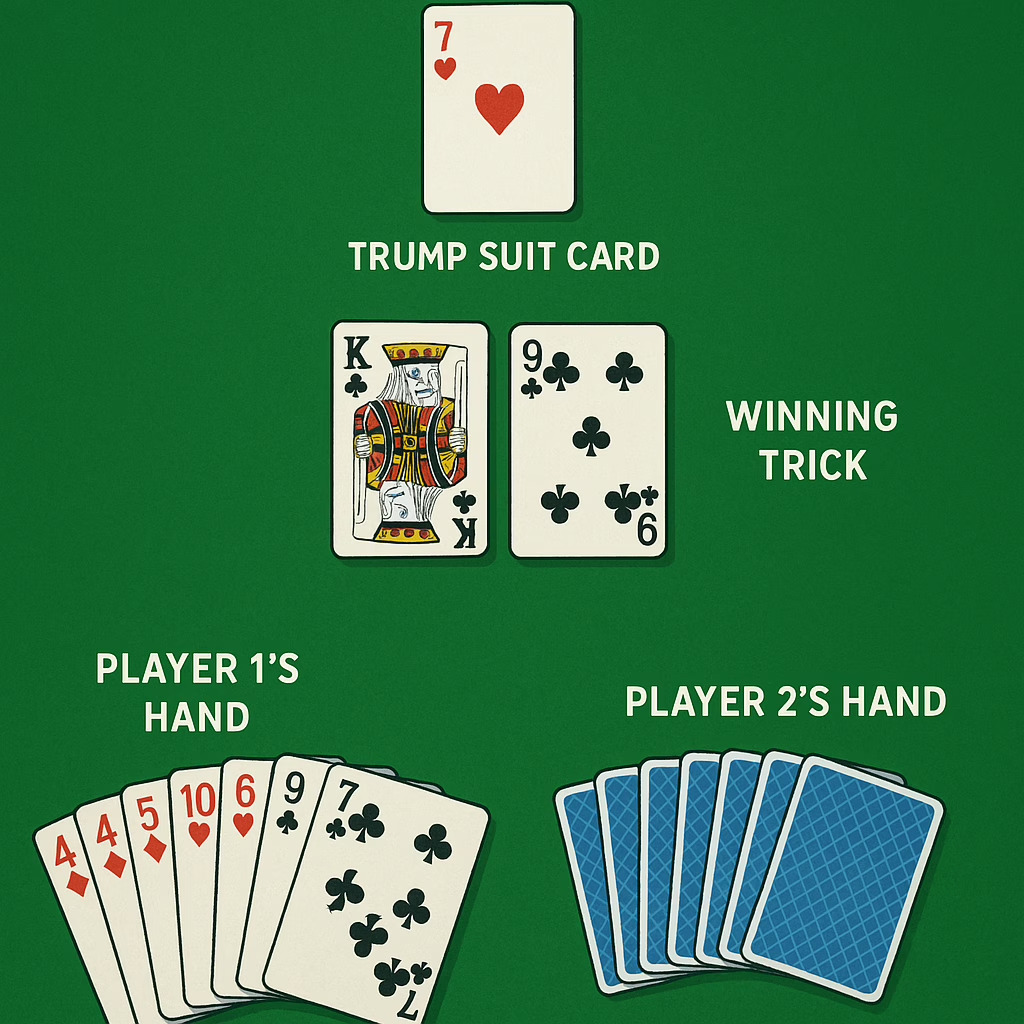
This is the best two-player trick-taking game for beginners, and it has an unusual two-phase structure. Deal thirteen cards each. Place the remaining 26 face-down as the stock and turn its top card face-up; that card's suit is trumps for the whole hand.

In the first phase you are not playing for points, you are playing for cards. The non-dealer leads, the other must follow suit if able, and the higher card of the led suit wins — unless someone plays a trump, in which case the highest trump wins. The trick winner takes the face-up stock card into their hand; the loser takes the next card off the stock without showing it. Then a new stock card is turned up and the winner leads again. After thirteen tricks the stock is empty and both players hold thirteen cards.
In the second phase you simply play those thirteen tricks out, and only these tricks count. Seven of the thirteen wins the hand. Why play it: the first phase is a genuinely clever puzzle — you often want to deliberately lose a trick when the exposed card is worthless, so you can keep your high cards for the half that matters.
11. Piquet
Objective: Score the most points over six deals, known as a partie.
Piquet is played with a 32-card pack — take a standard deck and remove the 2s through 6s, leaving 7 up to Ace. Deal twelve cards each; the remaining eight form the talon in the middle. The non-dealer (the elder hand) discards up to five cards and draws the same number from the top of the talon. The dealer (the younger hand) may then exchange up to whatever is left.

Before any cards are played, the two players compare three declarations in order. Point goes to the longer suit, scoring one per card. Sequences — three or more cards running in one suit — score 3 to 15 points depending on length, and only the player with the best sequence scores any. Sets of three or four cards of the same rank (10 or higher) score 3 or 14, again winner-takes-all. Then the twelve tricks are played: one point for leading to a trick, one for winning a trick you did not lead, one for the last trick, ten for taking the majority of tricks, and forty for taking all twelve.
Why play it: Piquet has been called the finest two-player card game ever designed, and the declaration phase — where you must reveal enough to claim a score without telling your opponent your whole hand — has no real equivalent anywhere else. It is also comfortably the hardest game here to learn, with archaic terminology and bonus scores (repique, pique, capot) that take several sessions to absorb. Expect to play three or four parties before it feels natural.
Easy Card Games for Two: Family-Friendly Picks
Three games that any child who can recognise a Queen can play, all of which stay tolerable for the adult sitting opposite.
12. Go Fish
Objective: Collect more four-of-a-kind books than your opponent.

With two players, deal seven cards each and spread the rest face-down as the fishing pool. On your turn, ask your opponent for a specific rank — but you must already hold at least one card of that rank yourself. If they have any, they must hand over all of them, and you ask again. If they do not, they say "go fish" and you draw one card from the pool; if that card happens to be the rank you asked for, you take another turn.
As soon as you hold all four cards of a rank, lay the book face-down in front of you. If you ever run out of cards while the pool still has cards in it, draw a fresh hand of up to seven. The game ends when all thirteen books have been made, and whoever has more of them wins.
Why play it: Go Fish is a memory game wearing a card game's clothes — the real skill is remembering what your opponent asked for three turns ago, which is why children get startlingly good at it. Between two adults it is thin, so treat it as a game to play with a child rather than a game to play seriously.
13. Crazy Eights
Objective: Be the first to discard your whole hand.

Deal seven cards each, place the rest face-down as the stock, and turn the top card face-up to start the discard pile. On your turn, play one card that matches the top of the discard pile in either rank or suit — the 7 of clubs can be followed by any club or any other 7. If you cannot play, draw from the stock until you can, or until the stock is exhausted, at which point you pass.
All four Eights are wild. You may play an Eight on anything at any time, and you name the suit that the next player must follow. The first player to empty their hand ends the round and scores the cards left in their opponent's hand: 50 for each Eight, 10 for each face card, face value for the rest, 1 for an Ace. Play to a target of 100 points, and the lower total wins.
Why play it: This is the game that became UNO, and it is the best compromise on the list when the two players have very different skill levels — the rules are trivial, but holding your last Eight for the right moment is a genuine decision. Every mobile card game you already know how to play is descended from it.
14. Old Maid
Objective: Do not be the player left holding the odd Queen.

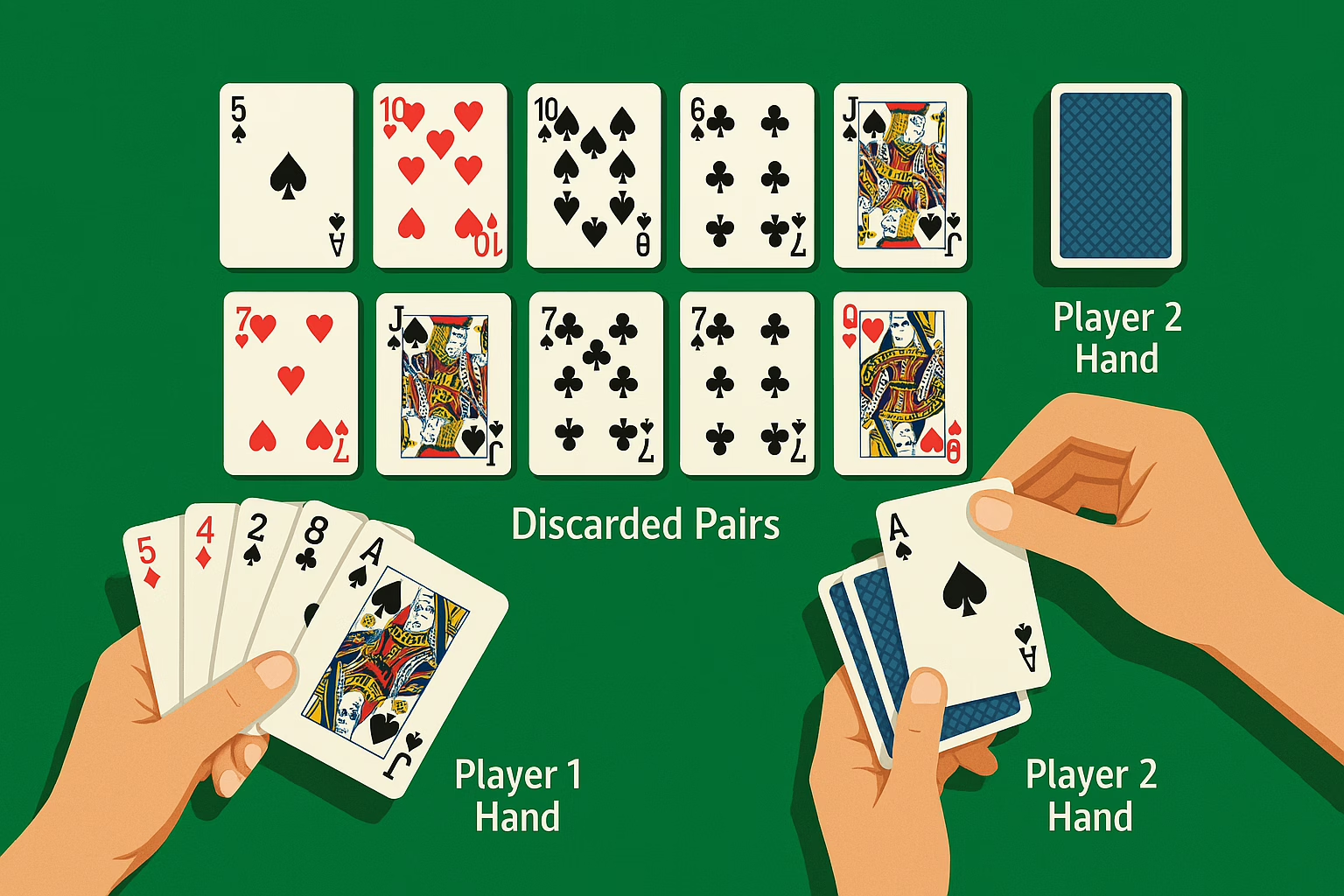
This is one of the few games here that modifies the deck: remove a single Queen before you start, leaving 51 cards and one Queen with no partner. That lone Queen is the Old Maid. Deal all the cards out — an uneven split is fine and expected. Both players immediately discard every pair they were dealt, face-down.
Now hold your remaining cards fanned face-down towards your opponent and take turns drawing one card blind from each other's hand. Any pair you complete is discarded straight away. As the hands shrink the tension rises, and the game ends when one player has discarded everything — the other is left holding the Old Maid and loses.
Why play it: With only two players Old Maid becomes almost pure bluffing, because you can watch exactly which card your opponent is nudging forward and how carefully they are hiding it. That is far more fun than the four-player version. It is also over in about five minutes, which is roughly the right length.
Intermediate Card Games for 2 Players
Four games that take a little more explaining than Crazy Eights but reward you for it — including the two that Solitaire players take to fastest.

15. Kings in the Corner
Objective: Be the first to empty your hand.
Deal seven cards each and place the rest face-down in the centre. Turn four cards face-up and lay them out around the stock in a cross — one above, one below, one to each side. These are the four starting piles.
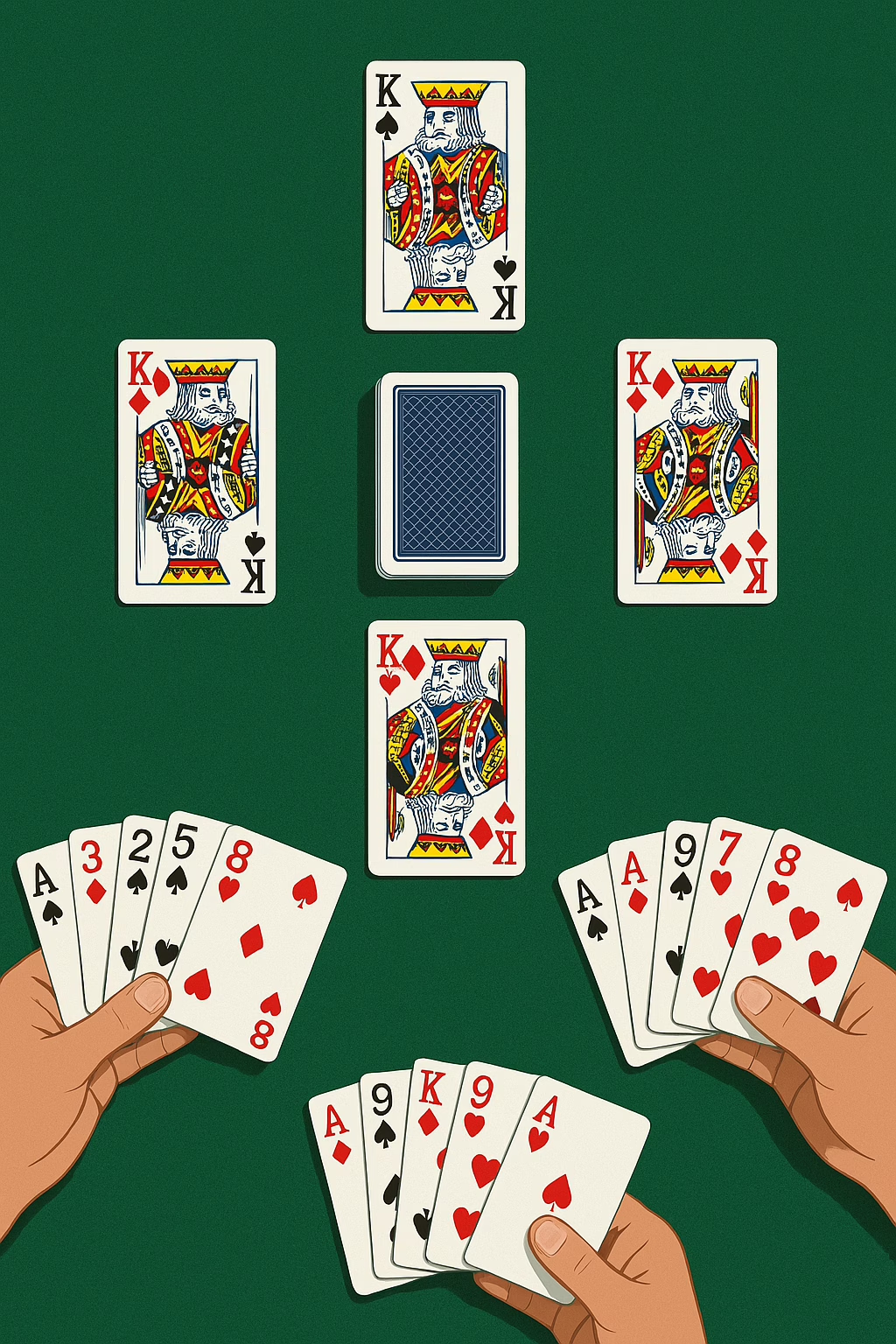
On your turn, first draw one card from the stock. Then make as many moves as you like: play cards onto the four piles in descending order and alternating colours, exactly as in Klondike Solitaire, so a red 9 goes on a black 10. You may move an entire pile onto another pile if the sequence fits, which frees up a space. Only a King may be placed in one of the four empty corner positions between the arms of the cross, starting a new pile. When you have no more moves you want to make, discard one card face-down and your turn ends.
Why play it: It is the closest thing to competitive Solitaire that uses only one deck, and anyone who plays Classic Solitaire will already know every rule of the tableau. The interesting tension is that consolidating piles helps you now but opens corners your opponent can use next turn.

16. Double Solitaire
Objective: Get more of your cards onto the shared foundations than your opponent.
This is the one game on the list that genuinely needs two decks — and they must have different back designs, so you can tell whose cards are whose when you count up at the end. Each player deals a standard Klondike layout in front of themselves: seven columns of one to seven cards, top card face-up, the rest as their own stock.
The tableaus are private, but the foundations in the middle are shared. There are eight of them, one per suit per deck, and either player may start one with any Ace and build up on any of them in suit. Your own tableau follows normal Klondike rules — build down in alternating colours, only a King fills an empty column. Most people play simultaneously, with no turns at all, and a card touching a foundation first simply wins the race. When neither player can move, count the foundation cards by back design; more cards wins.
Why play it: If you already play Solitaire alone, this converts that skill into a head-to-head game with zero new rules to learn — the only change is that someone else is competing for your foundation slots. Our full guide to two-player Solitaire games covers the complete rules along with Nerts, Russian Bank and Spit, and winning Solitaire in fewer moves is directly useful here, because in a race the efficient line wins.
17. Cassino
Objective: Capture valuable cards; first to 21 points over several deals wins.
Deal four cards to each player and four face-up to the table, keeping the rest as stock. When both hands are empty, deal four more each — but no more table cards — and keep going until the deck is gone. Announce the last deal.
On your turn you play exactly one card, and you may do one of three things. Capture by pairing (your 7 takes any 7 on the table) or by combining (your 9 takes a 5 and a 4 together, or several such groups at once). Numeral cards count their face value, Aces count 1, and face cards can only capture by pairing and only one at a time. Build by adding your card to a table card to create a pile you announce and intend to capture next turn — you must be holding the card that will take it. Or trail, simply laying your card face-up on the table and taking nothing.
Whoever makes the last capture of a deal sweeps any cards left on the table. Scoring is 3 points for taking the most cards, 1 for the most spades, 2 for the 10 of diamonds (Big Cassino), 1 for the 2 of spades (Little Cassino), and 1 for each Ace — eleven points available per deal. Why play it: it is the best purely arithmetical game on the list, and the build mechanic gives it a bluffing layer that Cribbage does not have.
18. Spit (Slam)
Objective: Be the first player to run out of cards entirely.
Split the deck 26 and 26. Each player lays out five tableau piles containing one, two, three, four and five cards, with the top card of each face-up — fifteen cards in total. Your remaining eleven cards are your spit pile, held face-down.
On a count of three, both players flip the top card of their spit pile into the centre, creating two build piles. Now play at the same time, with no turns: take any face-up tableau card that is one rank higher or lower than the top of either centre pile and slam it down. Aces wrap around to Kings. Whenever a tableau pile empties, you may move a face-up card from another of your piles into the gap, and any newly exposed card is turned face-up. When both players are stuck, you both spit again.
The moment you clear your tableau, slap whichever centre pile you want — normally the smaller one. Each player takes the pile they slapped, shuffles it with anything they have left, and deals a new (smaller) layout for the next round. Keep going until one player has too few cards to lay out at all and clears them; that player wins. Why play it: Spit is a faster, more physical Speed, and because the loser of each round takes the bigger pile the game naturally builds towards a finish.

Advanced Card Games for 2 Adults
Two games with a gambling heritage. Both work perfectly well for matchsticks, and both reward a player who can hold a running count in their head.
19. Blackjack (Head-to-Head)
Objective: Get closer to 21 than the dealer without going over.
One player acts as the dealer for the round; swap the role every hand so neither of you keeps the house edge. Deal two cards to the player face-up, and two to the dealer with one of them face-down. Number cards score their face value, face cards score 10, and an Ace counts as 11 unless that would bust you, in which case it counts as 1.
The player acts first: hit to take another card, or stand to stop. Going over 21 is a bust and an immediate loss, even if the dealer later busts too. With a pair you may split into two hands; after your first two cards you may double down, taking exactly one more card for a doubled stake. The dealer then reveals the hole card and must keep hitting until reaching 17 or more, with no choices at all. Closer to 21 wins; a two-card 21 is a blackjack and traditionally pays one and a half times the stake.

Why play it: The hands are almost instant and the decisions are crisp, which makes it the best game here for playing while you talk about something else. Be aware of the structure, though: Blackjack was designed as a player-versus-house game, and the dealer's advantage is real. Alternating the role every hand is not optional if you want it to be fair.
20. Tonk
Objective: Go out by melding all your cards, or drop with the lowest count.
Tonk is a stripped-down, fast Rummy that came out of American street play. Deal five cards each and turn one card up to start the discard pile. Face cards count 10, Aces count 1, and everything else counts its face value. If your five dealt cards total 49 or 50, announce a tonk immediately — you win the hand at double stakes before a card is played.
Otherwise, on your turn draw one card from the stock or take the top discard, then discard one. You may spread melds face-up — three or more of a rank, or three or more in sequence in a suit — and once a spread is on the table you can hit it with matching cards from your hand, including your opponent's spreads. Playing your last card ends the hand instantly and wins it.
The distinctive move is the drop. At the start of any turn, before drawing, you may drop instead: both hands are revealed and the unmelded counts compared. Drop with the lower count and you win. Drop with a count equal to or higher than your opponent's and you are caught, and pay double. Why play it: the drop turns every hand into a bluffing decision about whether your opponent is holding low, which is why Tonk plays faster and more nervously than Gin Rummy.
How to Choose the Right Card Game for 2
With twenty options, the quickest way to pick is to answer three questions:
- How long have you got? Under five minutes: Speed, Spit, Old Maid or a few hands of Blackjack. Half an hour: Cribbage, Cassino or a Gin Rummy match. A whole evening: a Piquet partie.
- Who are you playing with? A young child: War, Snap, Slapjack, Go Fish. A teenager or a partner: Crazy Eights, Gin Rummy, Egyptian Rat Screw. Another card player: Cribbage, Piquet, German Whist, Cassino.
- What mood are you in? Loud and physical: Slapjack, Spit, Egyptian Rat Screw. Quiet and thoughtful: Cribbage, Gin Rummy, German Whist. Somewhere in between, with room to talk: Rummy, Kings in the Corner, Crazy Eights.
If you enjoy the strategic side of card games, solo play sharpens the same muscles. Exploring different types of Solitaire is a genuinely good way to build pattern recognition and tactical planning — the two skills that separate a strong Gin Rummy or Cassino player from a lucky one. And if you want the same thing on a phone, Solitaire Castle Royal from Brightpoint Studios brings TriPeaks Solitaire to mobile with daily challenges and hundreds of hand-built levels.
Prefer Solitaire? There Are Two-Player Versions Too
Double Solitaire at number 16 above is not the only option. Solitaire has a whole family of games built for two people, all of them based on sharing the foundation piles in the centre of the table while each player works their own layout:
- Double Solitaire — two Klondike tableaus racing onto shared foundations. The easiest to learn if you already play Solitaire.
- Nerts (also Nertz, Pounce or Racing Demon) — simultaneous, fast, and the one people get properly hooked on.
- Russian Bank — strictly turn-based, and the only one where you can deliberately load cards onto your opponent's piles to slow them down.
- Spit — a single deck, two centre piles, and pure speed.
Our guide to two-player Solitaire games has the complete rules and scoring for all four. Prefer to play alone right now? You can play Klondike Solitaire free in your browser, or try FreeCell and TriPeaks — no download, no sign-up.